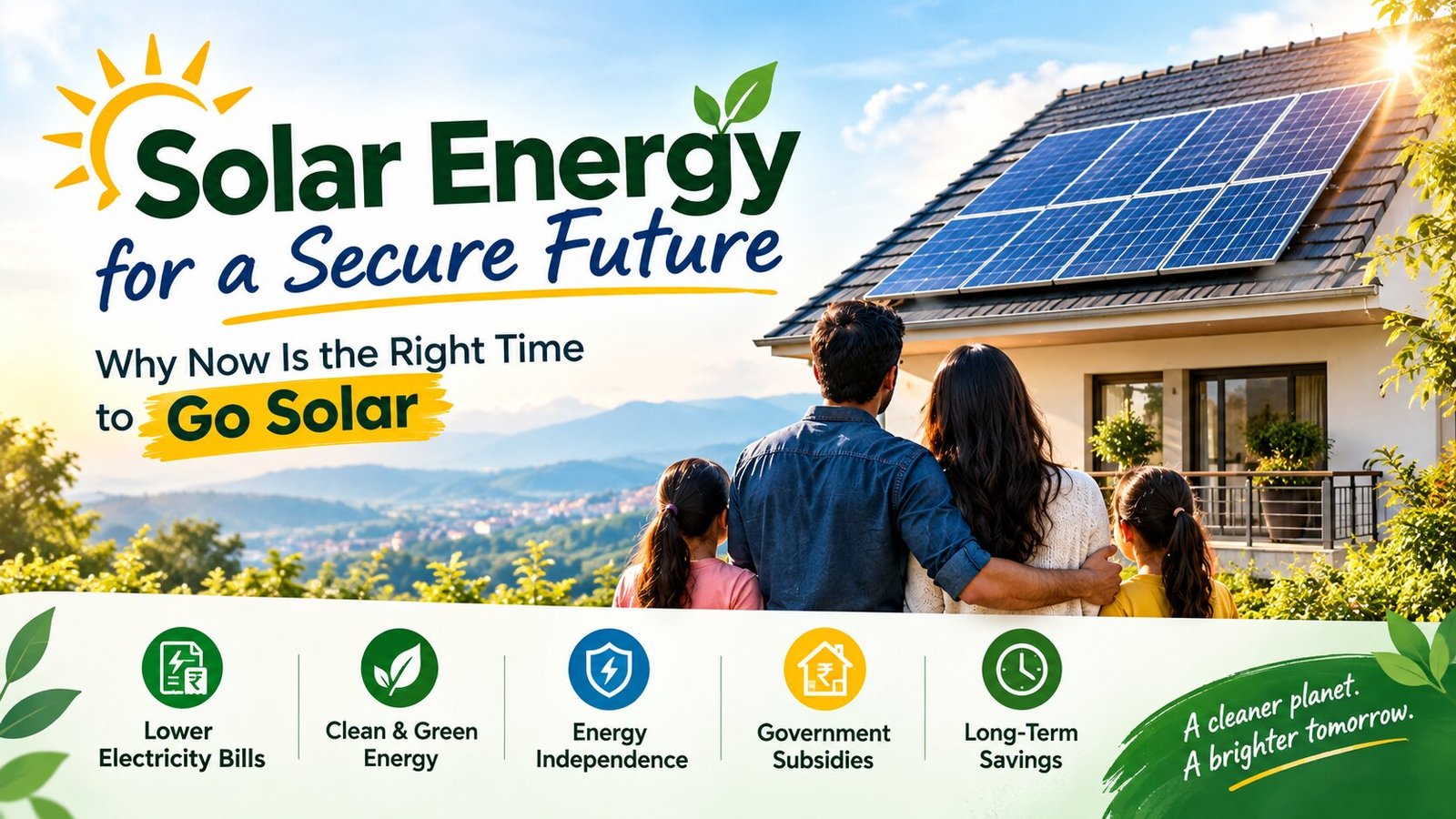
Solar Energy for a Secure Future: Why Now Is the Right Time to Go Solar
Electricity has become an essential part of everyday life. From running lights, fans and air conditioners at home to powering machines, computers and equipment in businesses, our dependence on electricity continues to grow.
At the same time, electricity bills can become a significant monthly expense. For many families and businesses, the question is no longer simply how much electricity they use, but how they can manage their energy costs in the years ahead.
This is where solar energy can make a real difference.
Installing a solar system is not just about saving money on today’s electricity bill. It is a long-term decision that can help reduce electricity expenses, improve energy independence and provide greater control over future energy costs.
Why Are More People Considering Solar Energy?
The idea behind solar power is simple. Solar panels use sunlight to generate electricity that can be used to meet your home’s or business’s energy requirements.
For a homeowner, this can mean producing electricity during the day instead of depending completely on electricity from the grid. For a business, solar can help reduce one of the recurring operating costs that continues month after month.
The important point is that solar is not only about installing panels on a roof. A properly designed solar system starts with understanding your electricity consumption, available roof area, shadow conditions, system capacity and future requirements.
That is why a professional site assessment is an important first step.
A Secure Future Starts With Better Energy Planning
Most people plan their finances carefully. They think about savings, property, insurance, education and retirement.
Energy is often overlooked.
Yet electricity is something we are likely to need for decades. As homes become more dependent on air conditioning, appliances, electric vehicles and other electrical equipment, electricity consumption can increase over time.
Businesses face a similar situation. Expanding operations, adding machinery, increasing working hours or installing new equipment can all increase energy demand.
Solar gives you an opportunity to plan ahead.
Instead of treating electricity only as a monthly expense, you can start looking at it as an area where a long-term investment may help reduce future costs.
Solar Can Help Reduce Electricity Bills
One of the biggest reasons people install solar is to reduce their electricity bills.
The amount you can save depends on several factors, including your electricity consumption, system size, location, roof conditions, tariff structure and how much of your generated electricity you use.
A well-designed system can generate a substantial amount of electricity during daylight hours. For homes and businesses that consume electricity during the day, this can be particularly useful.
However, it is important not to choose a solar system simply because someone recommends a certain number of panels.
The right system should be based on your actual electricity usage and requirements.
Solar for Homes: More Than Just Lower Bills
For homeowners, solar can become a long-term investment in the property.
A typical home may use electricity for fans, refrigerators, televisions, water pumps, washing machines, computers and air conditioning. As more electrical appliances are added, the monthly electricity requirement can increase.
Solar can help offset part of that requirement by generating power from sunlight.
It can also encourage homeowners to become more conscious of their energy consumption. When you understand how much electricity your home uses and when it uses the most power, it becomes easier to make smarter energy decisions.
For families thinking about their future, solar can therefore be part of a broader plan for managing household expenses.
Solar for Businesses: Protecting Your Operating Costs
For commercial and industrial users, the financial case for solar can be even more important.
Electricity is often a regular operating expense for offices, shops, warehouses, factories, hotels, restaurants and other businesses.
Unlike a one-time purchase, electricity bills continue throughout the life of a business.
A properly planned commercial solar installation can help reduce the amount of electricity that needs to be purchased from the grid.
The key is to look at the business’s load profile.
A factory that uses large amounts of electricity during the daytime may have a different solar requirement from a shop that operates mainly in the evening.
This is why commercial solar should be designed around actual consumption rather than simply installing the largest possible system.
What About Solar Subsidies?
Government solar schemes and subsidies can make residential solar more attractive for eligible customers.
However, subsidy rules, eligibility requirements and application procedures can change. Customers should always check the current official requirements before making a financial decision.
A professional solar company should clearly explain the applicable process and help customers understand what is included in the proposal.
Do not make your decision based only on the word “subsidy.”
Look at the complete picture: system capacity, equipment quality, installation, warranty, expected generation, maintenance and the estimated return on your investment.
The Right Solar System Is More Important Than the Cheapest Solar System
Solar is a long-term investment, so price should not be the only factor.
Two quotations can look similar while offering very different equipment, installation standards and service support.
Before selecting a solar company, ask questions such as:
- Which solar panels are being proposed?
- What inverter will be installed?
- What warranties are included?
- How will the system be installed?
- Will the roof structure be checked?
- How will system performance be monitored?
- What maintenance support is available?
- What assumptions were used to calculate savings?
A transparent quotation should make these details easy to understand.
The cheapest quotation today may not always represent the best value over the lifetime of the system.
Solar Is an Investment, Not a Quick Fix
It is important to have realistic expectations.
Solar does not mean that every electricity bill will automatically become zero. Actual savings depend on system design, electricity consumption, weather, equipment performance, tariffs and other factors.
Instead of promising unrealistic savings, a responsible solar provider should explain what the system is expected to generate and how that generation relates to your electricity consumption.
Think about solar as a long-term energy investment.
The goal is not simply to install panels. The goal is to create a system that works reliably and makes financial sense for your particular property.
Is Your Roof Ready for Solar?
Before installing solar, your property should be assessed properly.
Important factors include roof size, direction, sunlight availability, shading, structural conditions, cable routing and the location of electrical equipment.
Even a good-quality solar panel cannot perform properly if the system is poorly designed or affected by significant shading.
A site survey helps identify these factors before installation and allows the solar system to be designed around the property.
Take the First Step Toward Energy Independence
The transition to solar does not have to happen overnight.
The first step can simply be understanding your current electricity consumption and finding out whether solar makes financial and practical sense for your property.
Whether you own a home, office, shop, warehouse, hotel or industrial facility, a professional assessment can give you a clearer picture of your options.
At Rudra Solarize System, the focus is on helping customers understand their solar requirements before making a decision. From residential installations to commercial requirements, the system should be planned around actual energy consumption, available space and long-term goals.
Final Thoughts
A secure future is built through decisions that reduce unnecessary expenses and create greater control over the things we depend on.
Energy is one of those things.
Solar power gives homeowners and businesses an opportunity to generate their own electricity from a renewable source while potentially reducing their dependence on grid electricity and managing long-term energy costs.
The best time to understand your options is before rising energy requirements become a bigger financial burden.
Your roof has space. The sun provides the energy. The next step is understanding what a properly designed solar system could do for your home or business.
If you are considering solar, start with a professional site assessment and a transparent quotation. A few hours of planning today can help you make a much more informed energy decision for the years ahead.
Ready to Make the Switch to Solar?
A secure energy future starts with the right solar system. Whether you need solar for your home, office, shop, factory, or commercial property, Rudra Solarize System can help you understand your options, system size, pricing, and available government subsidy.
Get a Free Site Survey & Solar Consultation
📞 Call: +91 78000 77745
📲 WhatsApp: +91 78000 77745